
Late on a Saturday night in Charlotte, the blue light of my dual monitors reflects off my glasses as I wait for the Powerball draw results to populate. My wife is already asleep, and the only sound in the house is the steady, low hum of my desktop as I prepare to input the latest data into my master spreadsheet. It is a ritual I have kept up for months, fueled by equal parts curiosity and a professional distaste for unexplained randomness.
I am a data analyst by trade, which means I spend my daylight hours looking for efficiencies in supply chains and consumer behavior. When a few coworkers started a casual office pool for the Powerball, I joined for the social aspect, but the sheer randomness of the quick-picks bothered me. It felt inefficient. So, I spent a weekend building a basic spreadsheet to track draw frequencies, and before I knew it, I was falling down the rabbit hole of AI-based lottery analysis tools. I am not a mathematician or a gambling advisor, and I certainly don't have inside info. I am just a guy who likes finding patterns in data and documenting whether these fancy algorithmic tools actually deliver on their lofty claims.
The Six-Month Experiment: From Office Pool to Master Spreadsheet
My obsession began in earnest in mid-January. I decided to test three different AI lottery platforms to see if they could actually 'prune' the noise of a game that draws from 69 white balls and 26 red balls. The goal was simple: track every suggested pick against the actual draws every Wednesday and Saturday night (and the occasional Monday) to see if there was any statistical edge to be found. My wife thinks the spreadsheet—which now spans dozens of tabs and thousands of cells—is excessive. She is probably right, but there is something deeply satisfying about the data entry process.
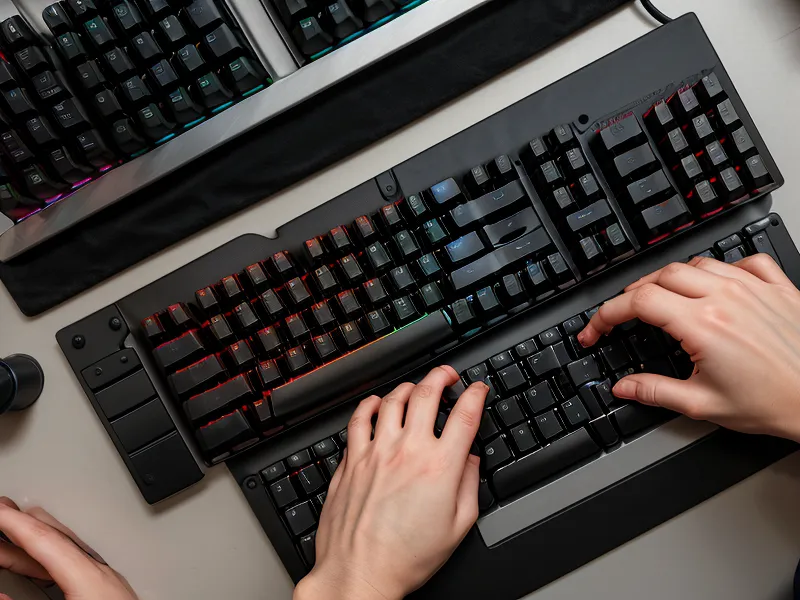
I remember one specific Tuesday evening last January when I first integrated a neural network-based tool into my tracking. I sat there feeling the specific tactile resistance of my mechanical keyboard as I entered the winning numbers from the night before, feeling the slight heat from the CPU under my desk as it processed my new 'weighted average' formulas. I wasn't looking for a magic bullet; I was looking for a way to stop playing numbers that had a near-zero statistical probability of appearing together.
The standard Powerball ticket costs $2, and while that seems like a small price for a dream, the odds of matching all five white balls and the red Powerball are roughly 1 in 292.2 million. Most people pick numbers based on birthdays or 'hot' streaks. As a numbers guy, I wanted to see if AI could do better by looking at the entropy of the draws—the measure of randomness and disorder in the system.
The Routine: Tracking Deltas and Weighted Averages
By late March, my routine was locked in. Every draw night, I would wait for the official results, then compare them against the 'suggested' lines from the AI tools I was testing. I started focusing on 'delta' values—the mathematical difference between consecutive numbers in a draw. For example, if the draw is 3-15-22, the deltas are 12 and 7. I found that human-picked numbers often have very high or very low deltas, whereas actual draws tend to cluster in a specific middle range.
The AI tools I was using claimed to use neural networks to identify these non-obvious frequency clusters. Instead of just telling me that 'number 23 is due,' they were looking at the relationship between all 69 balls. I was essentially running a six-month stress test. I even wrote about the spreadsheet that doesn't lie during this period, documenting how I was holding these platforms accountable to the raw data.
The most frustrating part was the inconsistency. One week, a tool would hit four out of five white balls on a suggested line, and I’d feel like I was on the verge of a breakthrough. The next week, it would be a total washout. My wife would hear the spreadsheet 'save' chime on Saturday nights, sigh, and adjust the volume on the TV. She didn't need to say anything; the sigh said it all. But even when the data was disappointing, I kept going. I wanted to know *why* it was failing when it did.
The Entropy Trap: Why 'Hot' Numbers Can Be a Liability
Around early June, I hit on a realization that changed how I looked at the AI suggestions. Most casual players chase 'hot' numbers—the ones that have appeared frequently in recent draws. However, my tracking showed a counterintuitive trend. Optimizing for these high-frequency patterns actually seemed to decrease the long-term hit rate of the picks. Why? Because lottery algorithms (the physical or digital systems used for draws) are designed to maintain long-term entropy.
In a truly random system, over thousands of draws, every number should appear roughly the same amount of times. If a certain sequence or cluster of numbers has appeared frequently in the last month, the system's 'need' for balance means that sequence is actually statistically *less* likely to repeat in the immediate future, even though each draw is technically an independent event. The AI tools that performed the best weren't the ones finding 'hot' numbers; they were the ones 'pruning' the search space by eliminating patterns that had already exhausted their short-term probability.
This is where the 'pruning' concept comes in. AI is excellent at filtering out the mathematically improbable. For instance, it rarely suggests consecutive sequences like 10-11-12, which humans often pick but which almost never occur in a 1-69 range. By removing these 'trash' combinations, the tools were effectively narrowing the field, even if they weren't predicting the exact winning numbers. It's a bit like a weather forecast—it can't tell you exactly where a raindrop will fall, but it can tell you the high-probability zone for the storm. I spent a lot of time building a weekly routine around this specific type of filtering, trying to separate the algorithmic signal from the noise.
The Reality Check: Data vs. Luck
Now, I have to be clear: I am not a financial advisor, and this is not a way to make 'easy money.' The lottery is, and always will be, a game of chance with a negative expected value. I treat my $2 tickets as the price of admission for my data project, not as an investment strategy. If you are looking for guaranteed returns, you're better off in a low-cost index fund. Always talk to a professional before putting any serious money into anything, and certainly never spend more than you're willing to lose on a game that has 1 in 292 million odds.
Over the last six months, my hit rate for small prizes (matching the Powerball or a couple of white balls) did see a marginal increase compared to my old random quick-picks. Was it enough to buy a beach house? Not even close. It mostly just covered the cost of the tickets and maybe a few extra cups of coffee. But for a data analyst, the 'win' wasn't the money—it was the validation that the AI was actually doing something more complex than just picking numbers out of a hat.

I found that the most effective use of these tools was as a 'reality check' for my own biases. As humans, we are hardwired to see patterns where none exist. We see a '7' and think it's lucky. The AI doesn't care about luck. It only cares about the distribution of the 69 white balls and the 26 red ones over the last few hundred draws. It reminded me that the 'randomness' we see is often just a lack of data processing power on our part.
Final Thoughts from the Charlotte Spreadsheet
As we move into the heat of the summer, I’m still updating the master spreadsheet every Wednesday and Saturday night. The mechanical keyboard still clacks, and the CPU still hums. My six-month deep dive has taught me that while AI isn't a crystal ball, it is a fascinating lens through which to view a game of pure chance. It has turned a mindless gamble into a structured data project that keeps my analytical brain sharp outside of my 9-to-5.
My wife still thinks it's a bit much, especially when I start explaining the correlation between delta values and draw entropy over breakfast. She’s probably right—it is a lot of work for a game that is essentially a tax on people who are bad at math. But for me, the tracking is the real reward. Whether the numbers hit or not, the data is always there, waiting to be organized, analyzed, and understood. And in a world that often feels as random as a Powerball draw, there is a certain comfort in that.
The information on this site is based on personal experience and research for informational purposes only. It is not a substitute for professional medical, financial, or legal advice. Always consult a qualified professional before making decisions that affect your health or finances.