
Late one Saturday night, the blue glow of my dual monitors reflected off my glasses as I realized my 'foolproof' spreadsheet had missed every single Powerball number. Again. The silence of the house was heavy, punctuated only by the low hum of my desktop tower and the smell of lukewarm coffee that had been sitting there since the 10:59 PM draw. It was a humbling moment for a guy who spends forty hours a week analyzing logistics data here in Charlotte.
Just a quick heads up before we get into the weeds: I use affiliate links on this site. If you decide to try one of these tools through my links, I earn a commission at no extra cost to you. I only write about platforms I have actually tested and tracked in my master spreadsheet. Also, I am not a financial advisor, a gambling expert, or a math wizard. I’m just a data analyst who finds lottery patterns more interesting than Netflix. Lottery is entertainment with a negative expected value—never play with money you can't afford to lose. Oh, and for the record, I have zero medical training, so consult a professional for anything health-related.
The Office Pool That Started the Obsession
This whole thing started innocently enough with the Wednesday office pool. My coworkers were picking birthdays and 'lucky' numbers they saw on fortune cookies. As a numbers guy, that randomness drove me crazy. I started a basic Excel sheet to track frequencies, which quickly evolved into a multi-tab monster. By late November, I realized my manual tracking couldn't compete with modern algorithms, so I dove into the world of AI lottery tools.
I’ve spent the last six months—from late autumn through the start of this summer—running a controlled experiment. I’ve tested three different platforms, comparing their 'suggested picks' against the actual Powerball draws that happen three times per week (Monday, Wednesday, and Saturday). It’s been a journey of small wins, massive spreadsheet errors, and a few hard lessons about what AI can and cannot do.
1. Treating AI Like a Crystal Ball Instead of a Filter
When I first signed up for LottoChamp in late November, I made the classic amateur mistake: I thought the AI was going to tell me exactly which numbers would drop next. I treated the output as a prediction rather than a statistical filter. In data analysis, we call this a 'black box' fallacy—trusting the output without understanding the underlying logic.
LottoChamp actually provides a massive historical database, which is its real strength. Once I stopped looking for 'The Six' and started using the tool to eliminate low-probability combinations based on frequency analysis, my tracking started to look a lot more professional. It’s about narrowing the field, not finding a needle in a 292.2-million-to-one haystack. If you're curious about how I shifted my mindset, you might want to check out my notes on Smarter Ways to Select Lottery Numbers Using Pattern Recognition Tools.

2. The 'Day Trader' Trap: Over-Fitting for Volatility
One Wednesday night in February, during a particularly nasty cold snap, I fell into a deep rabbit hole. I started treating Powerball numbers like I was day trading tech stocks. I was looking for real-time volatility and 'momentum' in the draws. Here’s the problem: standard AI lottery tools prioritize long-term historical trends, but day traders require real-time, high-frequency volatility analysis which most static lottery algorithms simply aren't built to process.
In the stock market, yesterday’s price affects today’s sentiment. In a lottery draw, the balls have no memory. I spent hours trying to find 'short-term trends' that were really just statistical noise. I was over-fitting my data to match the last three draws while ignoring the broader 10-year frequency. I realized that the tools that actually work, like LottoChamp, are successful because they don't try to be 'day trading' bots; they are long-term frequency analyzers. They even offer a 60-day money-back guarantee, which gave me the peace of mind to test this theory over a longer horizon without feeling like I was throwing money into a void.
3. Ignoring the 'Math Anchors' of the Game
By early April, my spreadsheet was so complex it was starting to lag my PC. I had forgotten the most basic math of the game: every Powerball ticket costs $2. When you start using AI tools, it’s easy to get excited and start playing more lines because the 'AI said so.' I fell into the trap of increasing my spend because my 'confidence interval' was higher.
I had to ground myself in the reality of the numbers. I started comparing my AI-assisted picks against the 'Lotto Master Key' approach, which I noticed had a conversion rate of about 1.66% for small-tier wins in my personal tracking. It wasn't making me a millionaire, but it was consistent. I realized that the goal wasn't to spend more, but to spend the same $10 or $20 more effectively. If you want to see how I compared these two approaches, I documented the whole thing in Manual Tracking vs AI Algorithms: My Charlotte Office Experiment Results.
4. The Macro Meltdown (And Data Integrity)
This was my most embarrassing moment as a data analyst. One Saturday morning in early April, I spent four hours building a complex macro to calculate 'weighted probability'—essentially trying to give more 'weight' to numbers that had appeared in the last 50 draws. I was so focused on the logic that I didn't realize I had a bug in the code. I ended up accidentally deleting the last three weeks of draw data from my master sheet.
I had no backup. I had to manually re-enter data for 9 draws, checking each one against the official records. It was a stark reminder that even the best AI tools are only as good as the data you feed them. If your personal tracking is messy, the AI’s suggestions won't save you. I’ve since learned to rely more on the built-in databases of tools like Lottery Defeated, which handles the historical tracking for you, reducing the chance of human (or macro) error.
5. Over-Complicating the Process (The 'Wife Test')
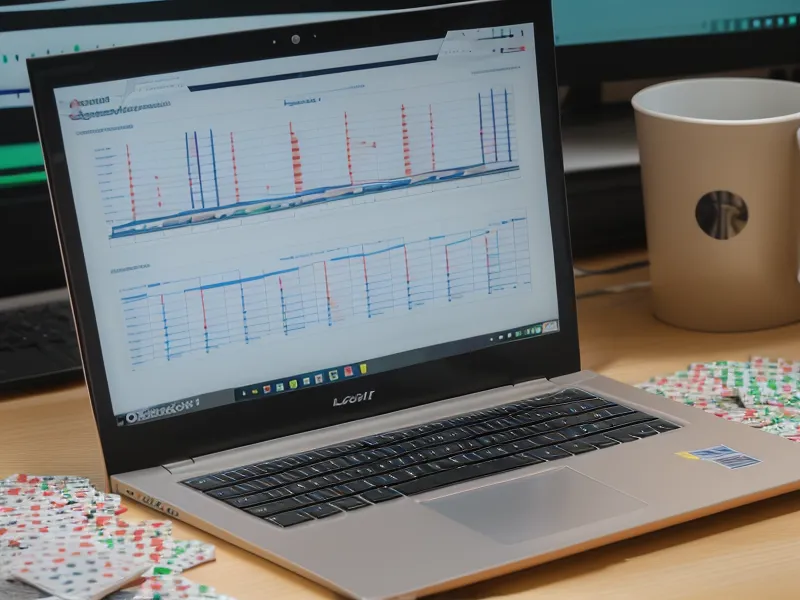
The week before Memorial Day, I was deep into my 22nd spreadsheet tab, trying to correlate moon phases with the Powerball 'Red Ball' frequency (yes, I know, it was getting weird). My wife walked into the office, saw the screen filled with conditional formatting and scatter plots, and slowly closed the door without saying a single word. That was my wake-up call.
I was making the process so complex that it wasn't fun anymore. I was treating it like a second job instead of a data hobby. AI tools are meant to simplify the analysis, not give you more work. I scrapped the moon phase tab and went back to basics: using AI to identify 'hot' and 'cold' numbers and then using a simple wheeling system to play them. I realized that tools like Lotto Master Key are popular precisely because they don't overwhelm you with 50 different variables.
What I’ve Learned After Six Months
Despite the mistakes, there is something undeniably addictive about the process. There’s still that sharp, cold spike of adrenaline when the first two numbers on the screen match the top of my 'high-probability' list from the AI. It doesn't happen every time—far from it—but it happens enough to keep the spreadsheet updated every Wednesday and Saturday night.
If you're just starting out, my advice is to keep it simple. Don't try to out-think the algorithm, and don't try to treat the lottery like a high-frequency trading floor. Use the AI to cut through the noise and stay organized. For most people, a tool that balances deep data with a clean interface is the way to go. I’ve found that LottoChamp hits that sweet spot for me, especially since its historical database is updated so frequently. You can read more about my specific findings with that tool in Beyond Random Luck: How to Use LottoChamp to Analyze Draw Frequencies.
I’m still a data analyst, and I still have a spreadsheet that my wife thinks is excessive. But at least now, the data is clean, the mistakes are documented, and I’m not trying to calculate the 'volatility' of a plastic ball. If you're ready to stop picking birthdays and start looking at the actual frequency data, checking out a dedicated AI tool is a solid first step toward a more analytical (and slightly less chaotic) game night.
The information on this site is based on personal experience and research for informational purposes only. It is not a substitute for professional medical, financial, or legal advice. Always consult a qualified professional before making decisions that affect your health or finances.